


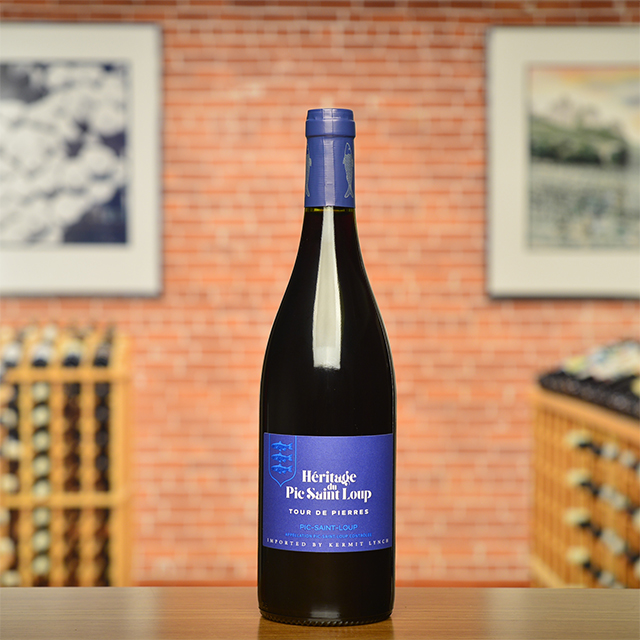
2024 Pic-Saint-Loup “Tour de Pierres”
Héritage du Pic Saint Loup
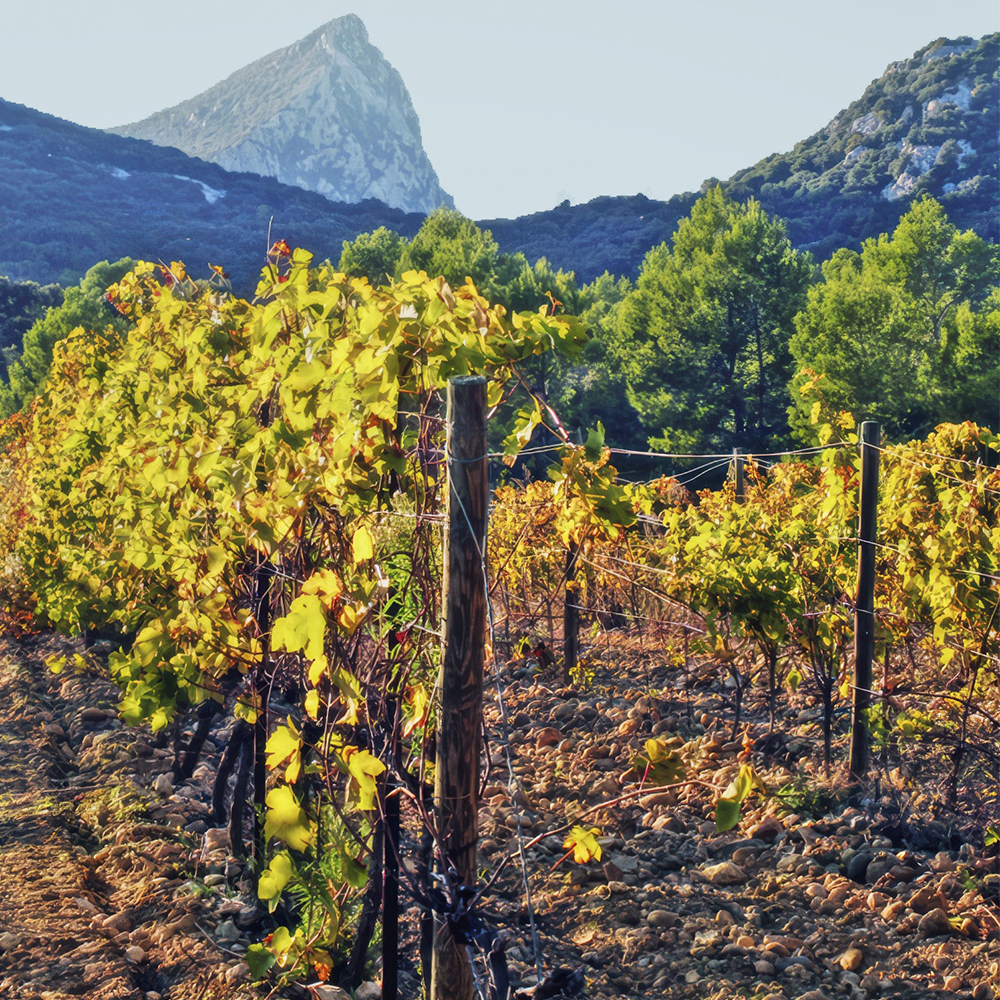
The Ravaille brothers’ vines, beneath the Pic Saint Loup
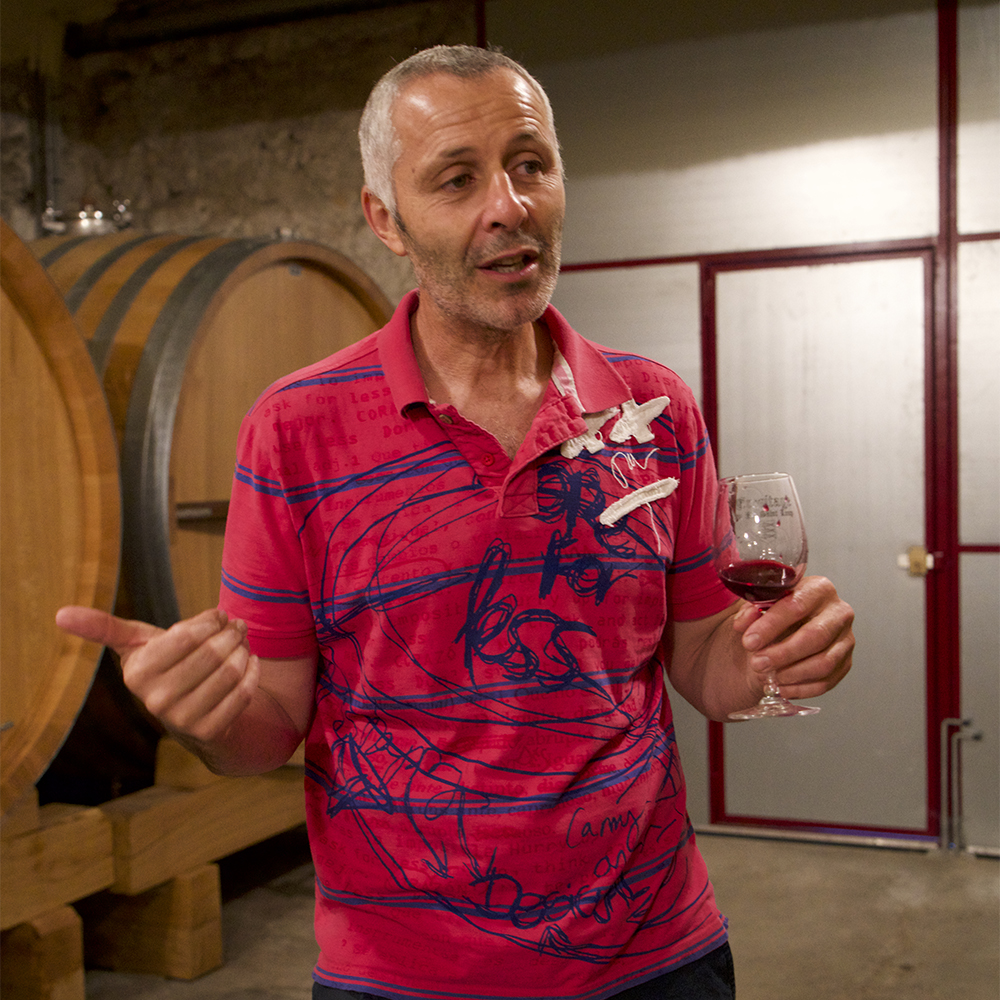
Pierre Ravaille
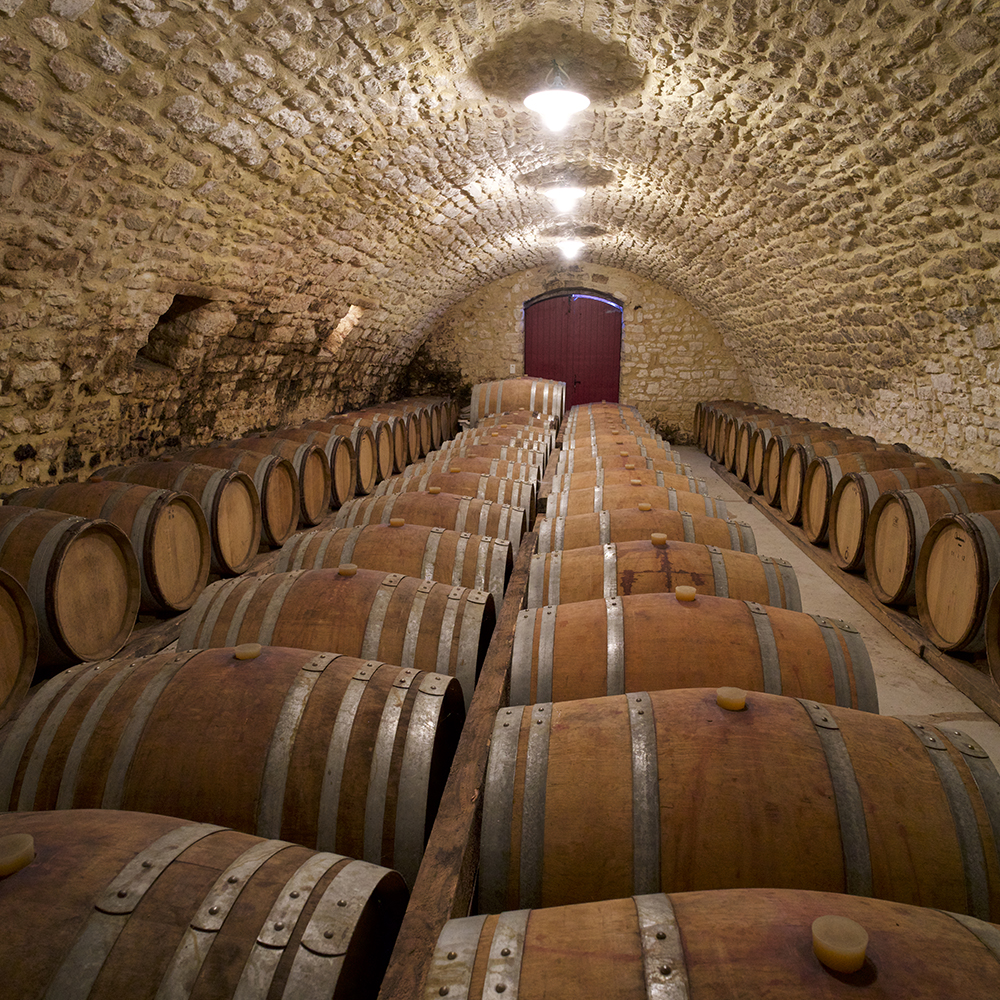
The Ravailles’ cellar
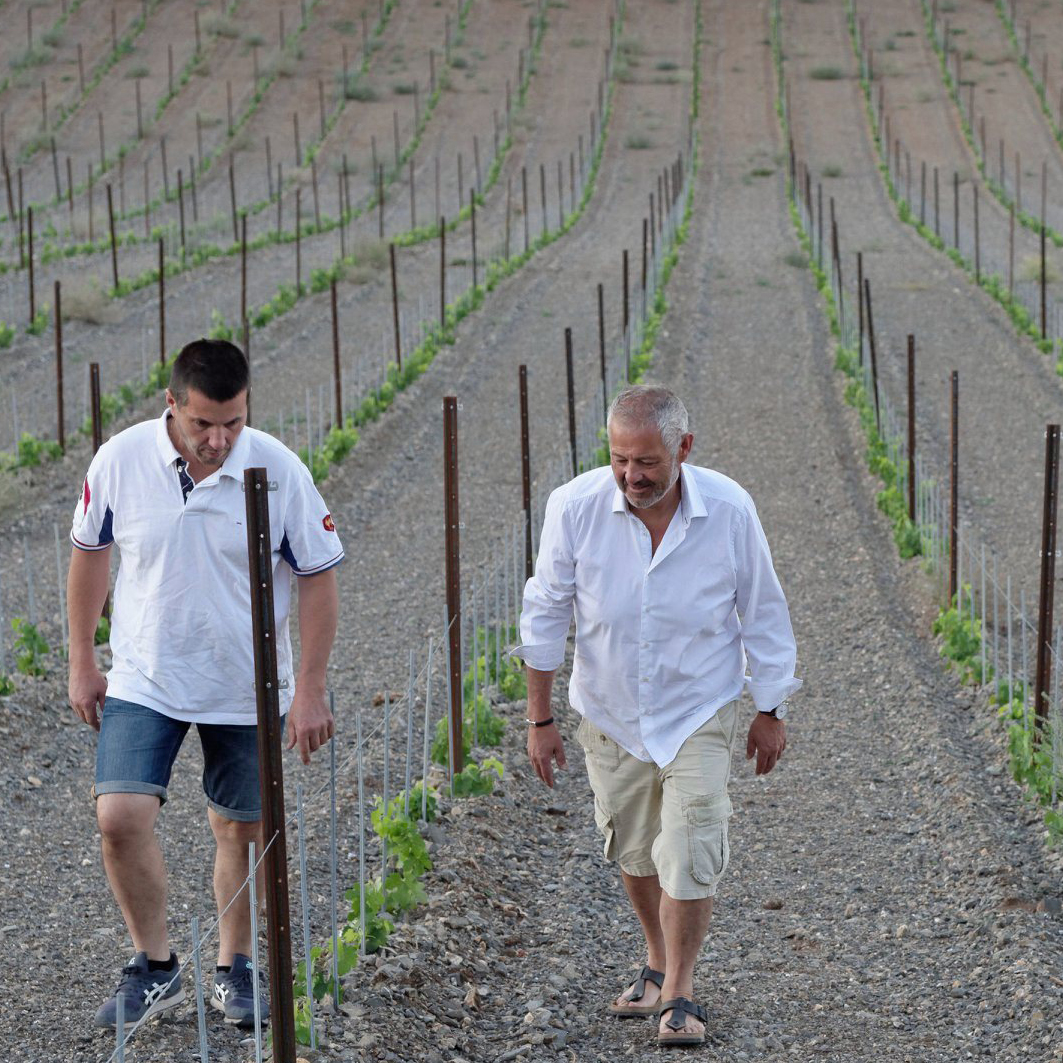
Jean-Marc and Xavier Ravaille
Just north of Montpellier, at the base of one of southern France’s most iconic formations, lies the sleepy medieval village of Saint-Mathieu-de-Tréviers—population 5,000. Over the last thirty years, the three Ravaille brothers have helped turn this area into one of the most exciting sites for forward-thinking viticulture in France.
Rewind to 1992, when brothers Jean-Marc, Xavier, and Pierre took over the family domaine in the shadow of Pic Saint Loup. They made two brave decisions almost immediately: to make wine from their own grapes rather than sell them to the local cave coopérative, and to pursue organic and biodynamic farming. “We wanted to be able to pick a bunch of grapes and eat them right there on the spot,” Pierre Ravaille tells me, “without having to wash off any product residues that might have remained on the skins.” This was brave, because the Ravailles’ home turf is humid and receives a lot of rainfall and the Mistral doesn’t blow as strong—i.e., it doesn’t wick away as much moisture and help as much with disease pressure—in Pic Saint Loup as it does in the nearby Rhône Valley. During the first few years of biodynamic conversion, Pierre says, “the vines lost vigor and became highly susceptible to disease. It is a phase where one must not lose heart; it takes five to six years to achieve stable yields and for the vines to build up a natural resistance to disease.” If you can persist, though, the payoff is more than worth the struggle. What’s more, the same terroir features that once posed challenges have become strengths, yielding reds of incredible freshness and finesse.
I’ve always marveled that this business, led by three brothers, has thrived so long, but when you look at the decades-long harmony they’ve formed not just with each other, but with their vines and ecosystem, it shouldn’t come as a surprise after all. Redolent of black cherries, tapenade, and herbs, this stony and savory rouge is a beautiful testament to this corner of the south!
—Tom Wolf
| Wine Type: | red |
| Vintage: | 2024 |
| Bottle Size: | 750mL |
| Blend: | 50% Syrah, 40% Grenache, 10% Mourvèdre |
| Appellation: | Pic-Saint-Loup |
| Country: | France |
| Region: | Languedoc-Roussillon |
| Producer: | Héritage du Pic Saint Loup |
| Winemaker: | Xavier, Pierre, and Jean-Marc Ravaille |
| Vineyard: | 30 - 40 years, 20 ha |
| Soil: | Red clay, limestone |
| Aging: | Aged in foudres and barriques for 12 months |
| Farming: | Biodynamic (practicing) |
| Alcohol: | 13.5% |
More from this Producer or Region
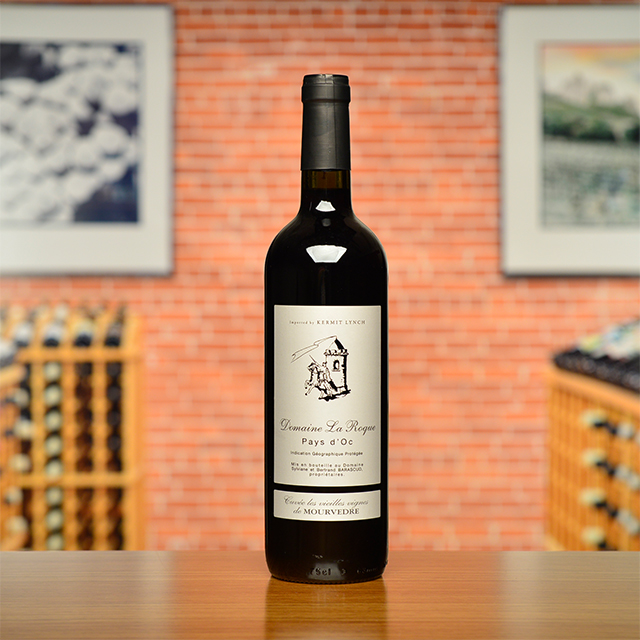
2021 Pays d’Oc Rouge “Les Vieilles Vignes de Mourvèdre”
France | Languedoc-Roussillon
This chewy, bone-warming red offers thick aromas of ripe black cherry and wild brush that beg for something hearty, such as an epic roast saturated with garlic and herbs.

2023 Pic-Saint-Loup Rouge “Sainte Agnès”
France | Languedoc-Roussillon
Savory and floral, with bright accents of orange zest, it soars over the palate with grace and finishes with a freshness reminiscent of cool stone.

2025 Languedoc Blanc “Cuvée Sainte Agnès”
| Languedoc-Roussillon
Evokes citrus rind, herbs, and sea spray and boasts all of the freshness of a Mediterranean breeze.

2022 Vin de France Blanc
France | Languedoc-Roussillon
Searching for something a bit funky to enliven your jaded palate? Look no further and prepare for an experience like none other.

2023 Pic Saint Loup “Guilhem Gaucelm”
France | Languedoc-Roussillon
One of the great reds of the Languedoc. Rhône Valley, look out!

2025 Collioure Blanc “Les Canadells”
France | Languedoc-Roussillon
Grenache (gris and blanc) gives this cuvée impressive body and grip while Vermentino and Macabeu lend it freshness and lift.

2024 Banyuls “Rimage”
France | Languedoc-Roussillon
Imagine a red, Grenache-based Sauternes, full of earth and spice, and you’ll have a decent idea how delicious this Banyuls tastes.

2025 Languedoc Rosé “Gris de Gris” MAGNUM
France | Languedoc-Roussillon
This crisp and succulent vin gris is a guaranteed thirst-quencher.

2025 Pic Saint Loup Rosé
France | Languedoc-Roussillon
Deeply vinous, yet immensely refreshing, it delivers a juicy burst of wild strawberry and lingering salinity that inspire sip after sip.

2021 Languedoc Montpeyroux Rouge “Les Cocalières”
France | Languedoc-Roussillon
Fadat’s bottlings from this terroir have proven to be among the most complex and elegant wines of southern France.


About The Producer
Héritage du Pic Saint Loup
Héritage du Pic St-Loup dates back to the Middle Ages, as the former home of the bishops of Maguelone. The limestone peak or “pic” perched above the vineyards was named for the legendary Saint Thieri Loup. In 1992, the Ravaille brothers joined forces to plant a vineyard here in what has traditionally been land dominated by sheep farming and cheese production. The Ravaille family has been in the Languedoc for over a thousand years, long enough to have known Saint Loup personally. These brothers have been on a noble quest of their own to create serious wine that expresses the complexity of their terroir. The three fish on the label’s emblem therefore not only evoke the story of Saint Loup, but also their fraternal collaboration.
About The Region
Languedoc-Roussillon

Ask wine drinkers around the world, and the word “Languedoc” is sure to elicit mixed reactions. On the one hand, the region is still strongly tied to its past as a producer of cheap, insipid bulk wine in the eyes of many consumers. On the other hand, it is the source of countless great values providing affordable everyday pleasure, with an increasing number of higher-end wines capable of rivaling the best from other parts of France.
While there’s no denying the Languedoc’s checkered history, the last two decades have seen a noticeable shift to fine wine, with an emphasis on terroir. Ambitious growers have sought out vineyard sites with poor, well draining soils in hilly zones, curbed back on irrigation and the use of synthetic fertilizers and pesticides, and looked to balance traditional production methods with technological advancements to craft wines with elegance, balance, and a clear sense of place. Today, the overall quality and variety of wines being made in the Languedoc is as high as ever.
Shaped like a crescent hugging the Mediterranean coast, the region boasts an enormous variety of soil types and microclimates depending on elevation, exposition, and relative distance from the coastline and the cooler foothills farther inland. While the warm Mediterranean climate is conducive to the production of reds, there are world-class whites and rosés to be found as well, along with stunning dessert wines revered by connoisseurs for centuries.
More from Languedoc-Roussillon or France
2022 Vin de France Blanc de Voile
Ludovic Engelvin France | Languedoc-Roussillon
2024 Saint-Chinian Blanc
Mas Champart France | Languedoc-Roussillon
2023 Saint-Chinian Rouge “Causse du Bousquet”
Mas Champart France | Languedoc-Roussillon
2021 Corbières “Rozeta”
Maxime Magnon France | Languedoc-Roussillon
2025 Languedoc Rosé “Gris de Gris”
Domaine de Fontsainte France | Languedoc-Roussillon
2024 Banyuls “Rimage”
Domaine La Tour Vieille France | Languedoc-Roussillon
2025 Collioure Blanc “Les Canadells”
Domaine La Tour Vieille France | Languedoc-Roussillon
2022 Collioure Rouge “La Pinède”
Domaine La Tour Vieille France | Languedoc-Roussillon
Banyuls “Reserva”
Domaine La Tour Vieille France | Languedoc-Roussillon
2022 Corbières Rouge
Domaine de Fontsainte France | Languedoc-Roussillon
2023 Pic-Saint-Loup Rouge “Sainte Agnès”
Héritage du Pic Saint Loup France | Languedoc-Roussillon
2023 Saint-Chinian Rouge “Clos de la Simonette”
Mas Champart France | Languedoc-Roussillon
2022 Vin de France Blanc de Voile
Ludovic Engelvin France | Languedoc-Roussillon
2024 Saint-Chinian Blanc
Mas Champart France | Languedoc-Roussillon
2023 Saint-Chinian Rouge “Causse du Bousquet”
Mas Champart France | Languedoc-Roussillon
2021 Corbières “Rozeta”
Maxime Magnon France | Languedoc-Roussillon
2025 Languedoc Rosé “Gris de Gris”
Domaine de Fontsainte France | Languedoc-Roussillon
2024 Banyuls “Rimage”
Domaine La Tour Vieille France | Languedoc-Roussillon
2025 Collioure Blanc “Les Canadells”
Domaine La Tour Vieille France | Languedoc-Roussillon
2022 Collioure Rouge “La Pinède”
Domaine La Tour Vieille France | Languedoc-Roussillon
Banyuls “Reserva”
Domaine La Tour Vieille France | Languedoc-Roussillon
2022 Corbières Rouge
Domaine de Fontsainte France | Languedoc-Roussillon
2023 Pic-Saint-Loup Rouge “Sainte Agnès”
Héritage du Pic Saint Loup France | Languedoc-Roussillon
2023 Saint-Chinian Rouge “Clos de la Simonette”
Mas Champart France | Languedoc-Roussillon
Our Guarantee

Our Guarantee
We only import wine we drink and enjoy ourselves, directly from the source.
Our wine tastes the same in your home as it did where it was bottled in Europe.
Like the long-term relationships we build with growers, we build long-term relationships with our clients. Have a question? Need wine advice? Just give us a call—510-524-1524.