


2024 Moulin-à-Vent “Sous la Roche”
Domaine Thillardon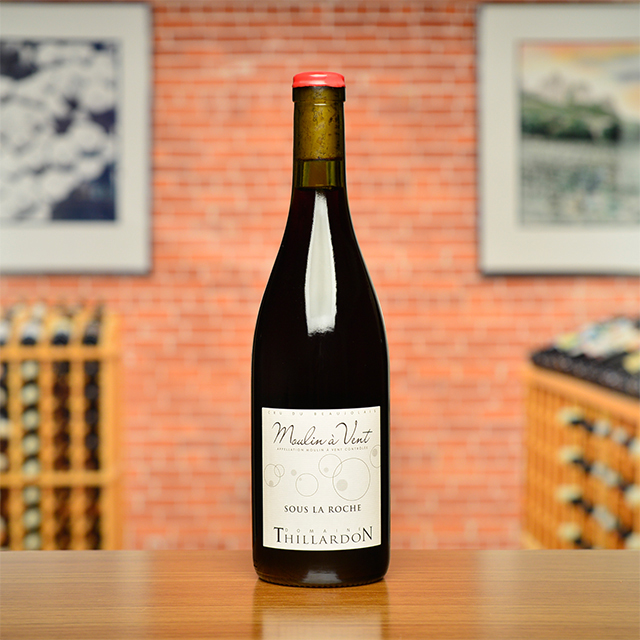
Just over the hill from Chassignol, with southern exposure, it combines the structural grandeur typical of Moulin-à-Vent with a high-elevation freshness.
—Anthony Lynch
| Wine Type: | red |
| Vintage: | 2024 |
| Bottle Size: | 750mL |
| Blend: | Gamay |
| Appellation: | Moulin-à-Vent |
| Country: | France |
| Region: | Beaujolais |
| Producer: | Domaine Thillardon |
| Winemaker: | Paul-Henri Thillardon |
| Vineyard: | Planted in 2016; .36 ha |
| Soil: | Pink granite |
| Farming: | Organic (certified) |
| Alcohol: | 11% |
More from this Producer or Region

2023 Chénas “Chassignol”
France | Beaujolais
A finessed, mineral-driven beauty from hundred-year-old vines at the highest point in Chénas.
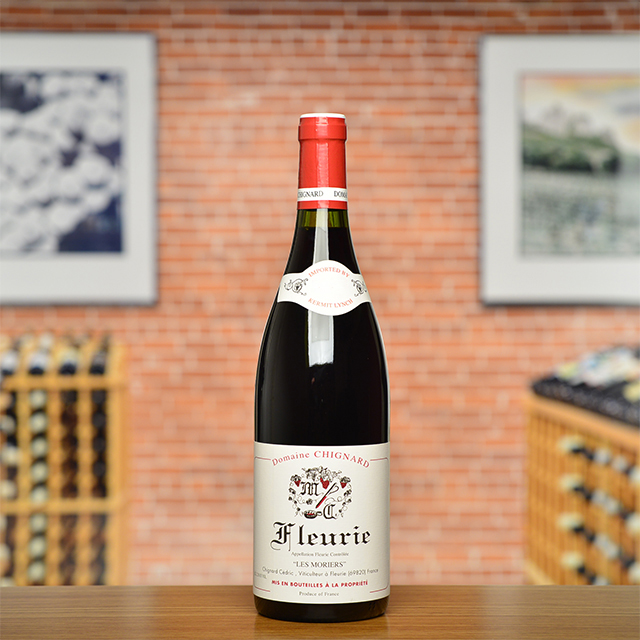
2024 Fleurie “Les Moriers”
France | Beaujolais
February Club Gourmand ~ Showcasing notes of brambly fruit, violet, stone, and smoke, this classic bottling of Les Moriers offers so much to love.

2024 Chénas “Les Carrières”
France | Beaujolais
All of their Chénas are silky and high-toned, but Les Carrières is their most featherweight cuvée—a real springtime treat.

2024 Beaujolais-Villages
France | Beaujolais
This drinks like a Gamay infusion with lovely hints of potpourri, spice, and fresh grapes.

2023 Côte de Brouilly
France | Beaujolais
Alex Foillard fashions a Côte-de-Brouilly that strikes a deeper register, saturating the senses with tooth-staining fruit, gritty earth, and just a touch of the good funk.

2023 Chénas “Vibrations”
France | Beaujolais
Its shimmering red fruit comes alive with a nice chill.

2024 Chénas “Vibrations”
France | Beaujolais
Vibrations, which is a blend of Chénas terroirs, is a lively and fresh Beaujolais, with bright red fruit and silky tannins.
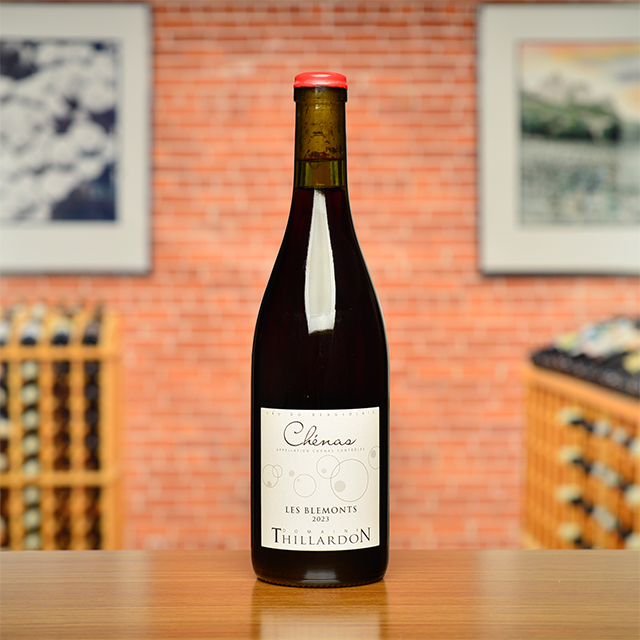
2023 Chénas “Les Blémonts”
France | Beaujolais
Structured yet full of energy, with notes of blueberry, spice, and other things nice.

2024 Côte de Brouilly MAGNUM
France | Beaujolais
Château Thivin’s Côte de Brouilly seamlessly fuses pleasure, class, and intellect.

2024 Morgon“Cuvée Marcel Lapierre”
France | Beaujolais
This particular bottling represents a rare cuvée spéciale from vines over one hundred years old; the texture here is pure velvet.


About The Producer
Domaine Thillardon
Paul-Henri Thillardon grew up in Beaujolais, where his family grew grapes to sell to the local co-op. He worked in the vines as a kid and aspired to make his own wine. At age twenty-one, he purchased vineyards in the cru of Chénas, seeing potential in an appellation that lacked the talent of Morgon and Fleurie. He farmed organically from the start and soon became exposed to the world of natural wine, taking advice from mentors such as Guy Breton. Paul-Henri’s siblings joined him at the domaine, and today they farm ten hectares of vines on a polyculture farm. The Thillardons have earned a reputation for their silky expressions of Gamay. Utilizing natural methods to create terroir-driven wines, the purity and vibrancy of their cuvées put them in company with the region’s most talented vignerons.
About The Region
Beaujolais

After years of the region’s reputation being co-opted by mass-produced Beaujolais Nouveau and the prevalence of industrial farming, the fortunes of vignerons from the Beaujolais have been on the rise in the past couple of decades. Much of this change is due to Jules Chauvet, a prominent Beaujolais producer who Kermit worked with in the 1980s and arguably the father of the natural wine movement, who advocated not using herbicides or pesticides in vineyards, not chaptalizing, fermenting with ambient yeasts, and vinifying without SO2. Chief among Chauvet’s followers was Marcel Lapierre and his three friends, Jean Foillard, Guy Breton, and Jean-Paul Thévenet—a group of Morgon producers who Kermit dubbed “the Gang of Four.” The espousal of Chauvet’s methods led to a dramatic change in quality of wines from Beaujolais and with that an increased interest and appreciation for the AOC crus, Villages, and regular Beaujolais bottlings.
The crus of Beaujolais are interpreted through the Gamay grape and each illuminate the variety of great terroirs available in the region. Distinguishing itself from the clay and limestone of Burgundy, Beaujolais soils are predominantly decomposed granite, with pockets of blue volcanic rock. The primary vinification method is carbonic maceration, where grapes are not crushed, but instead whole clusters are placed in a tank, thus allowing fermentation to take place inside each grape berry.
Much like the easy-going and friendly nature of many Beaujolais vignerons, the wines too have a lively and easy-drinking spirit. They are versatile at table but make particularly good matches with the local pork sausages and charcuterie. Though often considered a wine that must be drunk young, many of the top crus offer great aging potential.
More from Beaujolais or France
2024 Morgon “La Roche Pilée”
Jean-Paul et Charly Thévenet France | Beaujolais
2024 Fleurie “Les Moriers”
Domaine Chignard France | Beaujolais
2024 Morgon
“Cuvée Marcel Lapierre”
M. & C. Lapierre France | Beaujolais
2024 Côte de Brouilly
Château Thivin France | Beaujolais
2023 Chénas “Chassignol”
Domaine Thillardon France | Beaujolais
2022 Côte de Brouilly
Guy Breton France | Beaujolais
2024 Morgon “Vieilles Vignes”
Guy Breton France | Beaujolais
2021 Côte de Brouilly
Alex Foillard France | Beaujolais
2023 Beaujolais Blanc
Domaine Dupeuble France | Beaujolais
2023 Fleurie
Jean Foillard France | Beaujolais
2024 Fleurie
Guy Breton France | Beaujolais
2023 Côte de Brouilly
Alex Foillard France | Beaujolais
2024 Morgon “La Roche Pilée”
Jean-Paul et Charly Thévenet France | Beaujolais
2024 Fleurie “Les Moriers”
Domaine Chignard France | Beaujolais
2024 Morgon
“Cuvée Marcel Lapierre”
M. & C. Lapierre France | Beaujolais
2024 Côte de Brouilly
Château Thivin France | Beaujolais
2023 Chénas “Chassignol”
Domaine Thillardon France | Beaujolais
2022 Côte de Brouilly
Guy Breton France | Beaujolais
2024 Morgon “Vieilles Vignes”
Guy Breton France | Beaujolais
2021 Côte de Brouilly
Alex Foillard France | Beaujolais
2023 Beaujolais Blanc
Domaine Dupeuble France | Beaujolais
2023 Fleurie
Jean Foillard France | Beaujolais
2024 Fleurie
Guy Breton France | Beaujolais
2023 Côte de Brouilly
Alex Foillard France | Beaujolais
Kermit once said...

Kermit once said...
A good doctor prescribed the wine of Nuits-Saint-Georges to the Sun King, Louis XIV, when he suffered an unknown maladie. When the king’s health was restored the tasty remedy enjoyed a vogue at court. Lord, send me a doctor like that!
Inspiring Thirst, page 117